Six recommendations to strengthen EU water policy through digital innovation
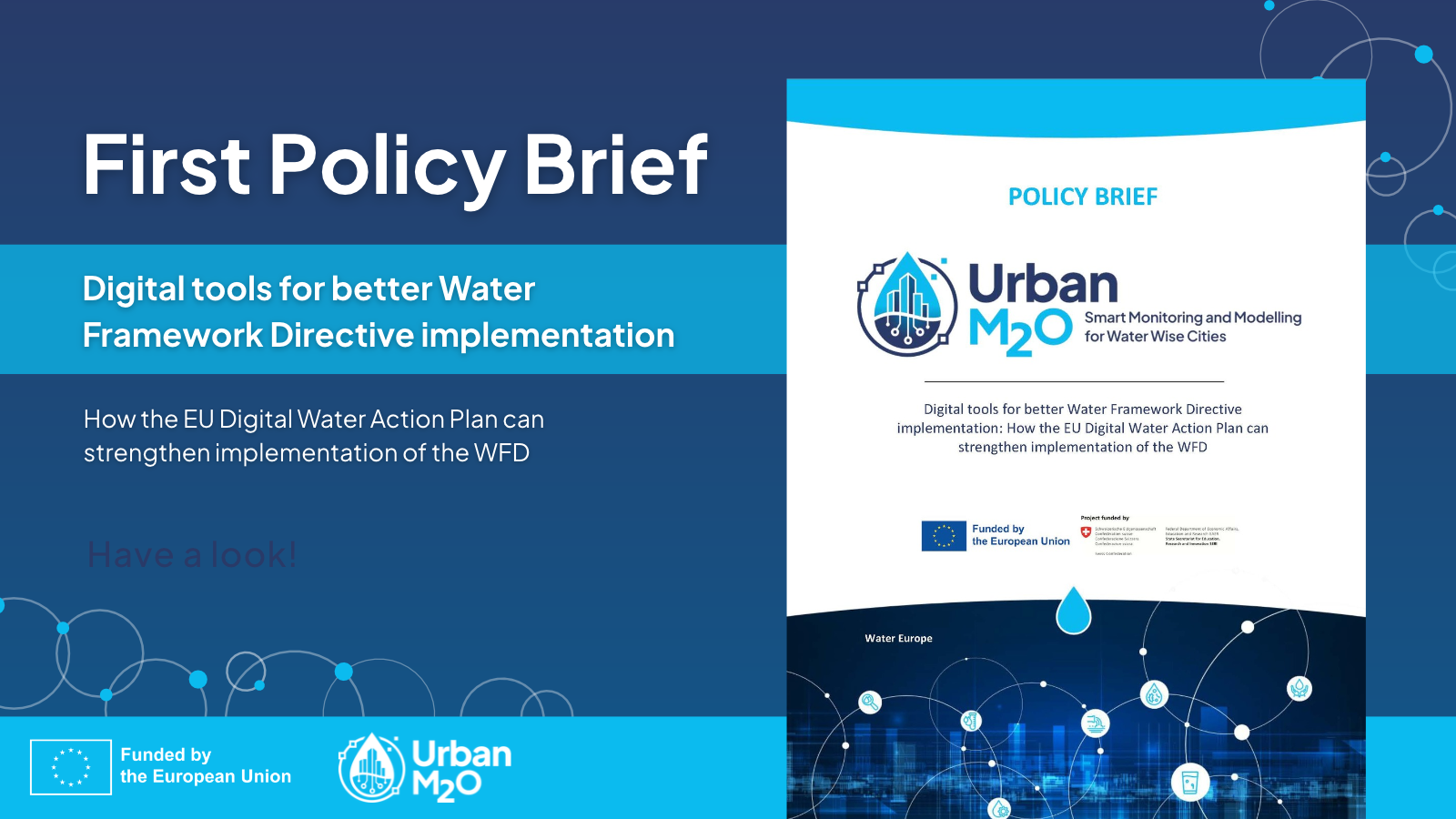
URBAN M2O’s first policy brief explores how the EU Digital Water Action Plan can support better implementation of the Water Framework Directive through connected data, trusted digital monitoring and tools designed around users’ needs.
Water monitoring generates valuable information, but differences in requirements, methods and data systems make it difficult to combine and reuse across the urban water cycle. This fragmentation increases workloads and limits the information available to authorities making decisions on pollution, monitoring and investment.
URBAN M2O’s first policy brief, “Digital tools for better Water Framework Directive implementation: How the EU Digital Water Action Plan can strengthen implementation of the WFD”, sets out six recommendations to address these challenges.
Drawing on 18 user stories co-developed with more than 110 stakeholders from 12 countries, the brief calls for digitalisation that supports environmental decision-making alongside operational efficiency.
Six priorities for digital water policy
The policy brief recommends that the Digital Water Action Plan should:
- Make Water Framework Directive implementation a flagship use case, helping authorities assess pressures, improve monitoring and design effective measures.
- Establish an interoperable European water-data framework, enabling information collected for one purpose to support multiple regulatory and operational needs.
- Create a trusted framework for digital monitoring and AI-generated evidence, with common principles for validation, uncertainty assessment, transparency and oversight.
- Connect digital twins and urban data to river basin planning, linking information from cities and utilities with decisions at basin level.
- Support user-centred and modular digitalisation, allowing authorities and utilities to adopt tools progressively according to their needs and capabilities.
- Explicitly recognise digital implementation in any future revision of the Water Framework Directive, while maintaining its environmental objectives.
Monitor once, use many times
A central message is that digitalisation should help authorities make better use of existing information. Harmonised data standards and interoperable systems could reduce duplication and allow monitoring data to support several pieces of EU water legislation.
The brief also highlights the importance of trust. AI-enhanced virtual sensors, predictive models and digital twins should complement conventional monitoring, supported by clear validation and scientific quality requirements.
URBAN M2O is developing digital solutions for urban water quality management through three case studies in Denmark, Switzerland and Spain. Its approach combines AI-enhanced virtual sensors, interoperable data management and digital urban water twins to help detect pollution, assess risks and support operational and strategic decisions.
The brief invites policymakers, water authorities, utilities and the research community to consider how these tools can become part of a more coherent approach to implementing EU water legislation.
Read and download the first URBAN M2O policy brief.